
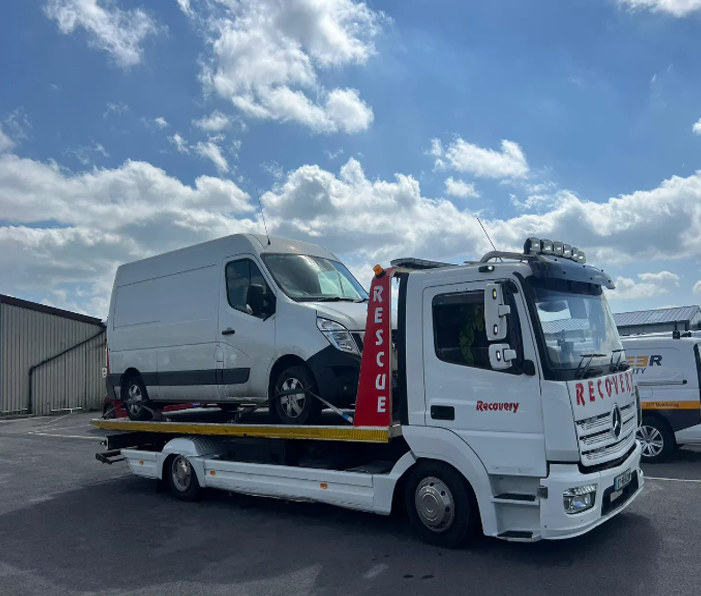
When your car refuses to start, loses power, or develops a warning light, it is natural to assume the next step is a tow truck. In many situations, towing is the right and safest solution. But not every breakdown needs recovery to a garage. If the vehicle is parked safely and the problem is minor enough to diagnose or repair on-site, a mobile mechanic may be able to get you moving again without the delay, cost, and disruption of a tow.
The key is knowing the difference between a roadside fault that can be handled where the car is and a fault that makes the vehicle unsafe to drive. A flat battery in your driveway is very different from steam pouring from the bonnet on a motorway. A puncture with a good spare wheel is very different from accident damage, broken suspension, or a serious fluid leak. That decision matters for your safety, your passengers, the technician, and other road users.
In this guide, we look at seven roadside repairs and checks a mobile mechanic can often handle, plus the warning signs that mean towing is still the better call. If you are unsure whether to call recovery or on-site assistance, our guide to tow truck vs mobile mechanic services in Dublin is a helpful companion read.
Roadside Repair vs Towing: What Is the Real Difference?
A roadside repair is about solving the problem where the vehicle is located. That could be at home, at work, in a car park, outside a shop, or on a safe roadside area. A mobile mechanic can inspect the vehicle, test key systems, run diagnostics, replace certain parts, or carry out a temporary fix that allows you to continue safely.
Towing, or breakdown recovery, is different. It is needed when the vehicle cannot be repaired safely where it is, cannot be driven without risking further damage, or is stopped in a dangerous location. A technician may still diagnose the fault, but the practical solution is to transport the vehicle to a garage, your home, or another secure place.
This is why safety comes before convenience. A mobile repair can be ideal when the car is accessible and the repair is straightforward. But on a hard shoulder, a narrow rural road, a blind bend, or in poor visibility, even a simple job can be unsafe. For a broader explanation of when roadside assistance ends and recovery begins, see this useful overview of breakdown recovery vs roadside assistance.
Before You Call Anyone: Make the Scene Safe
Before deciding between towing and a mobile mechanic, focus on safety. Pull over as far as you safely can, switch on your hazard lights, turn the wheels away from traffic if appropriate, and move passengers to a safe place. Do not stand between your vehicle and moving traffic. On fast roads, you should not attempt repairs yourself, and you should avoid lifting the bonnet if it puts you close to passing vehicles.
If you break down on a motorway or high-speed route, the decision is more urgent. Many repairs that are possible in a driveway are not suitable on a live motorway shoulder. If you are dealing with an incident on the M50, read our dedicated guide on what to do if your car breaks down on the M50 so you can prioritise the right steps.
7 Roadside Repairs a Mobile Mechanic Can Often Handle
1. Flat Battery Testing, Jump Starts, and Battery Replacement
A flat or weak battery is one of the most common reasons a car will not start. You might hear a rapid clicking sound, see dim dashboard lights, or get no response at all when turning the key or pressing the start button. In many cases, a mobile mechanic can test the battery, inspect the terminals, check alternator output, and decide whether a jump start is enough or a replacement battery is needed.
This can save you from towing a perfectly repairable car. For example, if you left lights on overnight at home or your car has been sitting unused for a while, a controlled jump start and battery test may get you going. If the battery has failed, a mobile mechanic may be able to fit the correct replacement at your location.
However, do not assume every non-start is a simple flat battery. Repeated jump starts can hide deeper issues such as a faulty alternator, starter motor problem, parasitic drain, damaged wiring, or poor earth connection. Modern vehicles can also be sensitive to incorrect jump-start procedures. If you want more detail, this guide to whether a dead car battery needs a jump start or replacement explains why proper testing is better than guesswork.
2. Starter Motor, Relay, and Ignition Fault Diagnosis
Sometimes the battery is healthy, but the engine still will not crank. You may hear one solid click, intermittent clicking, or nothing at all. This can point towards a starter motor, starter relay, ignition switch, immobiliser, wiring, or key recognition issue. A mobile mechanic can often carry out electrical checks on-site to narrow down the cause.
This is particularly useful when the car is at home, at work, or in a car park. Instead of arranging recovery immediately, the mechanic can test voltage supply, inspect connections, scan for relevant fault codes, and advise whether a repair is possible there and then. In some cases, a loose connection or relay issue may be resolved on-site. In other cases, the car may still need towing if parts are required or access is difficult.
Non-start faults can have many causes, so a structured diagnosis matters. A helpful overview of common reasons a car will not start covers issues such as battery, starter, fuel, key, and electrical problems, all of which can influence whether you need mobile repair or recovery.
3. Wheel Changes and Puncture Support
A puncture does not always mean towing. If your vehicle has a roadworthy spare wheel, locking wheel nut key, jack points in good condition, and enough safe space to work, a mobile mechanic or roadside technician may be able to change the wheel and get you moving again. This is often one of the quickest ways to avoid recovery.
There are limitations. Many modern cars have tyre inflation kits rather than spare wheels. Some space-saver spares have strict speed and distance limits. If the tyre is shredded, the wheel is damaged, the locking wheel nut key is missing, or the vehicle is on an unsafe stretch of road, towing may be more appropriate. You should also avoid driving on a flat tyre, as it can damage the wheel, suspension, and braking components.
A practical example: if you find a flat tyre in your driveway on Monday morning and the spare is usable, mobile help may be enough. If you hit debris on a dual carriageway and the car is sitting close to live traffic, safety becomes the main concern and recovery may be required.
4. Wrong Fuel Drain and Fuel Assist
Putting the wrong fuel in a car is more common than many drivers realise, especially when switching between petrol and diesel vehicles. The good news is that if you realise the mistake quickly, you may be able to avoid towing. The most important step is to stop immediately and do not start the engine. Starting the engine can move contaminated fuel deeper through the system, increasing the risk of damage.
A mobile fuel assist service may be able to come to your location, drain the tank safely, and advise on the next step. This is particularly useful at a filling station, at home, or in a workplace car park. If the engine has already been started and the vehicle is running roughly, smoking, stalling, or showing warning lights, you should not drive it further until it has been assessed.
For a deeper breakdown of the right steps after misfuelling, see this guide on what to do if you put the wrong fuel in your car. Acting quickly can be the difference between a mobile fix and a more expensive recovery and repair.
5. Basic Diagnostic Scans and Warning Light Checks
Modern cars are controlled by multiple electronic systems. An engine management light, ABS warning, battery light, emissions fault, or limp mode message can be worrying, but it does not always mean the car must be towed immediately. A mobile mechanic can often connect diagnostic equipment, read fault codes, check live data, and identify whether the issue is minor, intermittent, or serious.
For example, a loose sensor connector, weak battery voltage, or minor emissions-related fault may be diagnosed quickly. The mechanic can clear codes where appropriate, advise whether the fault returns, and recommend the next step. However, diagnostics are not magic. A code points towards a system or condition; it does not always identify a single failed part. Good diagnosis combines scan data with physical checks and experience.
You should stop driving and consider towing if the warning light is red, the oil pressure light appears, the engine is overheating, the car is misfiring badly, there is heavy smoke, or the vehicle loses braking or steering assistance. A mobile mechanic may still inspect the car, but driving it further could cause expensive damage or create a safety risk.
6. Minor Electrical Problems and Loose Connections
Some breakdowns are caused by small electrical faults rather than major mechanical failures. Loose battery terminals, corroded connections, blown fuses, poor earth straps, damaged relays, and simple wiring issues can all stop a vehicle from starting or cause intermittent faults. A mobile mechanic can often inspect these areas at the roadside or wherever the car is parked.
Imagine a car that starts some mornings but not others, or a vehicle that cuts out after hitting a bump. The problem may be a connection fault rather than a failed engine component. On-site testing can prevent unnecessary towing and avoid replacing parts without evidence. It also helps you understand whether the car is safe to use or needs garage attention.
That said, electrical faults can become complex quickly. If the issue involves water ingress, damaged control modules, burnt wiring, repeated fuse failure, or immobiliser faults, the vehicle may need specialist workshop diagnosis. The role of the mobile mechanic is often to separate simple fixes from faults that require recovery and deeper repair.
7. Temporary Fixes for Minor Leaks, Belts, Hoses, and Fluid Issues
Not every leak or fluid warning means the vehicle can be driven, but some minor issues can be assessed and managed on-site. A mobile mechanic may be able to top up fluids, inspect for obvious leaks, identify a split hose, check belt condition, or advise whether a temporary repair is safe enough to move the car a short distance.
The important word is safe. A small coolant top-up after a loose cap is very different from a major coolant leak with steam from the bonnet. A low washer fluid warning is not a breakdown, but an oil pressure warning can indicate serious engine risk. If the temperature gauge climbs into the red, if steam appears, if oil is leaking heavily, or if the brake pedal feels wrong, do not continue driving. In those cases, recovery is usually the responsible option.
A mobile mechanic can help you avoid panic by checking the fault and explaining the risk. Sometimes the answer is a simple top-up or clamp adjustment. Sometimes the answer is, unfortunately, a tow. Either way, you get a clearer decision than guessing from the driver seat.
When You Should Not Try to Avoid Towing
Avoiding towing is only a good idea when the vehicle can be repaired or moved safely. You should arrange recovery rather than pushing for a roadside fix if the vehicle has been involved in a collision, has steering or braking problems, is overheating severely, has a major oil or coolant leak, has suspension damage, or is stuck in an unsafe location.
You should also be cautious if the car went into limp mode with severe loss of power, if there are loud knocking or grinding noises, or if the dashboard shows red warning lights. Continuing to drive can turn a manageable repair into a major engine, gearbox, or safety issue. If the car is on the M50 or another fast route, your location may decide the answer before the fault does. In that situation, review our advice on breaking down on the M50 and prioritise getting everyone to a safe place.
How to Decide: Mobile Mechanic or Tow Truck?
Ask yourself four questions. First, is the vehicle in a safe place for someone to work? Second, is the fault likely to be minor enough to diagnose or repair on-site? Third, can the car be driven safely after the repair? Fourth, would continuing to drive risk further damage?
If the car is in a driveway, car park, workplace, petrol station, or wide safe lay-by, mobile assistance may be practical. If the problem is a flat battery, no-start diagnosis, puncture with a spare, misfuel before starting, minor electrical issue, or warning light that needs assessment, a mobile mechanic may help you avoid a tow. If the car is unsafe, badly damaged, overheating, leaking heavily, or blocking traffic, a tow truck is normally the better choice.
If you are still unsure, compare the options in our detailed guide: Tow Truck vs Mobile Mechanic: Which One Do You Need? It can help you choose the safest and most cost-effective route before you book help.
What to Tell the Mechanic or Recovery Operator
Good information helps the right service arrive with the right equipment. When you call, explain your exact location, whether the vehicle is in a safe place, the make and model, what happened before the fault, what warning lights are showing, whether the engine cranks, whether there are leaks or smoke, and whether you have a spare wheel or locking wheel nut key if the problem is a puncture.
If you put in the wrong fuel, say whether the engine was started. If the battery may be flat, mention whether the lights were left on or whether starting problems have happened before. If there was a noise, smell, impact, or sudden loss of power, describe it clearly. These details help the provider decide whether a mobile repair is realistic or whether recovery should be sent immediately.
Conclusion: Yes, You Can Sometimes Avoid Towing
Many breakdowns can be handled without towing, especially when the car is parked safely and the fault is relatively minor. Flat batteries, jump starts, battery replacements, starter checks, puncture support, wrong fuel drain, basic diagnostics, loose electrical connections, and certain fluid or hose issues can often be assessed by a mobile mechanic where the vehicle is.
But avoiding a tow should never mean taking a risk. If the vehicle is in a dangerous location, has serious mechanical symptoms, or cannot be driven safely after inspection, recovery is the smarter option. The best decision is the one that protects people first and the vehicle second.
When in doubt, describe the situation clearly and ask whether mobile repair or recovery is more appropriate. The right advice at the start can save time, prevent further damage, and get you back on the road with less stress.