
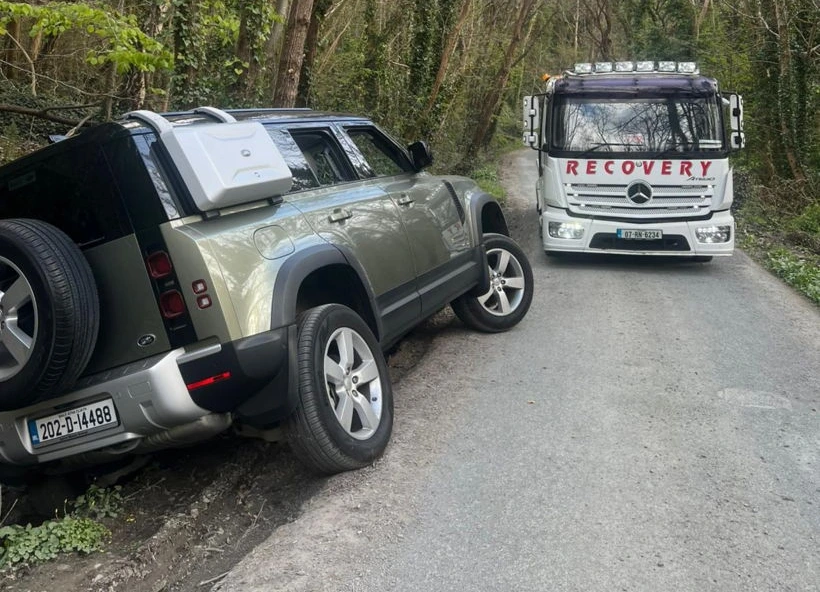
Breaking down is stressful at any time, but it feels much worse when it happens late at night, during a busy commute, in bad weather or on a major Dublin route such as the M50. When the car will not start, a warning light comes on, a tyre fails or the vehicle simply cannot be driven safely, the main questions are usually the same: how quickly can help arrive, how much will it cost, and do you need a tow truck or roadside assistance?
This guide explains how 24 hour breakdown recovery in Dublin typically works, what affects the callout price, what to expect at night or at weekends, and the key questions to ask before you book a recovery operator. It is written for drivers who need practical, commercial information rather than vague advice. If you are currently broken down, move to a safe place if possible, switch on your hazard lights, keep passengers away from traffic, and contact a recovery service with your exact location.
If you want a step-by-step safety guide for an active breakdown, you may also find this related TowNow article helpful: Breakdown Recovery Dublin: What to Do When Your Car Breaks Down.
What 24 Hour Breakdown Recovery Means in Dublin
24 hour breakdown recovery means a recovery provider can take calls and dispatch assistance outside normal business hours, including nights, early mornings, weekends and bank holidays. In Dublin, that may involve roadside help at your home, a jump start in an apartment car park, a tyre-related callout in the city centre, or a tow from a roadside location to a garage, home address or secure storage point.
It is useful to separate three common services:
- Roadside assistance: A technician attempts to get the vehicle moving again at the scene. This may include jump starting, helping with a wheel change, minor checks, fuel-related assistance or other simple issues where safe and practical.
- Vehicle recovery: The vehicle cannot be repaired safely at the roadside, so it is loaded and transported by a recovery truck.
- Accident recovery: The vehicle has been involved in a collision or road incident and may need careful loading, winching, transport or coordination with insurers or Gardaí depending on the situation.
Not every breakdown needs a tow. For example, a flat battery or minor starting issue may be resolved by roadside assistance, while engine damage, clutch failure, serious overheating or a locked wheel may require recovery. If you are unsure which service you need, this comparison may help: Tow Truck vs Mobile Mechanic: Which One Do You Need?
How Response Times Work for Dublin Breakdown Recovery
Response time is one of the biggest concerns when booking 24 hour recovery. A good operator should give you a realistic estimated time of arrival based on where the truck is, your location, current traffic and the type of recovery required. Dublin response times can vary significantly between a quiet residential area at midnight and a live-lane incident near a motorway junction during rush hour.
Main factors that affect response time
- Your exact location: A recovery truck can reach a clear address more easily than a vague location such as “near the canal” or “somewhere on the N7.” Use Eircode, Google Maps, a nearby junction, business name or landmark where possible.
- Traffic conditions: Dublin traffic can delay any road-based service, especially around the M50, city centre, Dublin Port, the airport, major event venues and peak commuting times.
- Vehicle position: A car in a driveway is usually simpler than a car stuck in a narrow underground car park, on a bus lane, on a hard shoulder or in a no-parking zone.
- Vehicle type and fault: A small hatchback with a flat battery is different from a van with suspension damage, an automatic stuck in park, or a vehicle with no keys.
- Weather and road conditions: Heavy rain, cold snaps, storm conditions and icy roads can increase demand and slow travel times.
- Time of day: Night-time traffic may be lighter, but fewer garages and parts suppliers are open, and specialist jobs may need extra planning.
When you call, the most useful information you can provide is your location, registration, make and model, whether the vehicle can roll, whether it is in a safe place, the symptoms of the problem, and where you want the vehicle taken. The more accurate your information, the easier it is for the operator to quote correctly and send the right truck.
If you are broken down on the M50, personal safety comes before price or convenience. Move away from the carriageway if safe to do so, do not attempt roadside repairs in a dangerous position, and follow emergency guidance. TowNow has a separate guide covering motorway-specific actions here: What to Do If Your Car Breaks Down on the M50.
How Much Does 24 Hour Breakdown Recovery Cost in Dublin?
There is no single fixed cost for all Dublin recovery jobs because every callout is different. A short local tow from a safe residential street during daytime hours is not the same as a late-night motorway recovery, an accident-damaged vehicle, a van in an underground car park or a car that needs winching. Most recovery pricing is built around a combination of callout, labour, distance, vehicle type, time and complexity.
The best approach is to ask for a clear quote before dispatch. A reputable recovery service should be able to explain what is included, what might increase the price, whether VAT is included, and what payment methods are accepted. Beware of vague “from” prices if the operator cannot confirm the likely total after you have provided your location and vehicle details.
Cost factor 1: Callout time and availability
A 24 hour service has to operate outside normal workshop hours. Night callouts, Sunday callouts and bank holiday callouts may cost more because staffing, availability and demand are different. This does not necessarily mean every night-time job is expensive, but it does mean you should confirm the rate before booking rather than assuming daytime pricing applies.
Cost factor 2: Distance to the vehicle and destination
Recovery costs are affected by how far the truck must travel to reach you and how far the vehicle needs to be transported. A tow from Drumcondra to a nearby garage will usually be more straightforward than a recovery from South Dublin to a specialist workshop in another county. If you are unsure where to bring the car, ask whether the operator can recommend practical options, such as your home, a local garage, a main dealer or secure storage until the garage opens.
Cost factor 3: Vehicle size, weight and condition
A small car, SUV, commercial van, electric vehicle or accident-damaged vehicle may require different equipment and loading methods. If the vehicle has no steering, no brakes, a broken wheel, locked transmission, low ground clearance or crash damage, recovery can take longer and may need specialist handling. Always explain the vehicle condition honestly when calling. It is better to get the right equipment first time than to have the wrong truck arrive and discover the job cannot be completed safely.
Cost factor 4: Roadside repair versus towing
If the issue can be fixed safely at the roadside, you may avoid the cost and inconvenience of a tow. A dead battery, simple wheel change or minor starting issue may be cheaper and faster to resolve on site than transporting the vehicle. However, modern cars can be complex, and roadside work is limited by safety, weather, available parts and the nature of the fault. For more examples, see TowNow’s guide to roadside repairs a mobile mechanic can handle.
Cost factor 5: Access, waiting time and extra handling
Access can be a hidden pricing factor. A vehicle in a tight basement car park may need a smaller recovery solution or extra manoeuvring. A car stuck behind a locked gate, blocked by other vehicles or missing keys may take longer to load. Waiting time can also matter if the driver is not with the vehicle, the Gardaí or insurer must be contacted, or the drop-off destination is not ready to accept the car.
Cost factor 6: Tolls, parking restrictions and storage
Dublin recovery jobs can involve toll roads, busy urban streets, loading restrictions, private car parks and storage decisions. If your car cannot be left at a garage because it is closed, you may need to choose between home delivery, secure overnight storage or a key-drop arrangement. Ask in advance whether tolls, storage, extra mileage or second delivery are included in the quote.
Night-Time, Weekend and Bank Holiday Recovery: What Changes?
Breakdowns do not wait for office hours. In Dublin, night-time and weekend recovery is common, but there are practical differences compared with a weekday morning callout. The recovery truck may be available, but your preferred garage may be closed. Parts suppliers may not be open. Apartment car parks may have access restrictions. The safest drop-off point may not be the most convenient one.
Before booking a late-night tow, decide what you want to happen after the vehicle is collected. Do you want it brought home, delivered to a garage forecourt, moved to a dealership, or stored securely until business hours? If you need to continue your journey after the tow, it can help to plan public transport or taxi options. The Transport for Ireland journey planner can be useful if you need to find an onward route after your vehicle has been recovered.
At night, personal safety is also a bigger consideration. If you are stopped in a poorly lit area, stay alert, keep your phone charged, and wait somewhere safe if possible. If the car is in a dangerous position, tell the operator clearly. Recovery drivers need to know whether the vehicle is blocking traffic, on a bend, in a bus lane or in a vulnerable roadside location so they can plan the safest approach.
What to Expect When You Call a Dublin Recovery Service
A professional 24 hour recovery call should be straightforward. The operator needs enough information to understand the situation, quote fairly and dispatch the right assistance. You do not need to be mechanically knowledgeable, but you should be ready to describe what happened in plain language.
Step 1: Location and safety check
The first priority is where you are and whether you are safe. Give an Eircode if available, or send a map pin. If you are on a motorway or national route, mention the direction of travel, nearest junction, exit number, visible signs or nearby landmarks. If anyone is injured or there has been a collision, emergency services and Gardaí may need to be involved before recovery.
Step 2: Vehicle details
You will normally be asked for the make, model, registration, vehicle size and whether it is automatic, electric, hybrid or modified. Mention if the vehicle has low suspension, a flat tyre, broken wheel, steering issue or cannot roll. These details help the recovery provider decide whether a standard truck, flatbed, wheel skates or other equipment may be required.
Step 3: Fault description
Describe the symptoms: no start, clicking noise, warning light, smoke, overheating, puncture, clutch pedal on the floor, accident damage, fuel issue or lost keys. If the car cut out while driving, say so. If it still starts but you are afraid to drive it, explain why. This helps the operator decide whether roadside assistance may be worth trying or whether immediate recovery is safer.
Step 4: Quote and ETA
Before confirming the booking, ask for the estimated arrival time and the quoted price. Confirm what is included, where the vehicle will be brought, and whether there are possible extra charges. A transparent quote protects both you and the recovery operator because the scope of the job is clear before the truck is dispatched.
Step 5: Arrival, loading and drop-off
When the recovery driver arrives, they will assess the vehicle and loading area. Follow their instructions, especially near moving traffic. You may be asked to release the handbrake, provide the key, confirm the destination and remove valuables. At the drop-off point, make sure you know where the vehicle is left, where the keys are going, and what information the garage needs in the morning.
Questions to Ask Before Booking 24 Hour Recovery
When you are stressed, it is easy to accept the first answer you hear. Use this checklist to avoid surprises:
- What is the estimated arrival time based on my exact location?
- Is the quote a fixed price for the details I have given, or can it change?
- Does the price include VAT, tolls, mileage, loading and drop-off?
- Are there extra charges for night-time, Sunday or bank holiday recovery?
- Can you help at the roadside first, or is towing the only option?
- Can you recover my vehicle type, including automatic, electric, SUV or van?
- Where will the vehicle be taken if the garage is closed?
- What payment methods are accepted?
- Will I receive a receipt or invoice for insurance, employer or business records?
- Can passengers travel with the recovery truck, or do we need separate transport?
These questions are especially important for business drivers, tradespeople, taxi drivers, delivery drivers and anyone travelling with children, passengers or valuable equipment. A slightly longer phone call at the beginning can prevent confusion later.
Practical Dublin Breakdown Examples
Example 1: Flat battery in a driveway in Clontarf
A driver returns from a weekend away and the car will not start on Sunday night. The vehicle is safely parked in a driveway and there is space to work. In this case, roadside assistance may be the first option. If the battery can be safely jump started and the charging system appears healthy enough to continue, towing may not be needed. The cost is likely to be influenced mainly by the callout time and location rather than complex recovery work.
Example 2: Puncture with no spare near Dublin Airport
A car has a tyre failure late at night and there is no usable spare wheel. If a safe wheel change is not possible, the vehicle may need to be recovered to a tyre centre, home address or secure location until a replacement tyre is available. Pricing may depend on access, airport-area traffic, parking restrictions, time of night and the distance to the chosen drop-off point.
Example 3: Overheating on the M50 during rush hour
An overheating engine on the M50 is not a situation where you should keep driving to “see if it clears.” Continuing can turn a manageable cooling issue into serious engine damage. The recovery service will need your exact direction of travel, nearest junction and whether you are on the hard shoulder or in a live lane. The response time may be affected by traffic, safety requirements and the recovery truck’s access route.
Example 4: Collision damage after a late-night incident
If your vehicle is damaged after a collision, recovery may involve more than simply towing a broken-down car. Make sure everyone is safe first, contact emergency services if required, and follow the correct reporting steps. If another driver is uninsured or cannot be identified, the Motor Insurers’ Bureau of Ireland may be relevant for information about compensation arrangements in certain uninsured or unidentified driver situations. This is separate from the recovery booking itself, but it can matter after a road traffic incident.
How to Reduce the Cost and Stress of a Recovery Callout
You cannot control every breakdown, but you can make the recovery process smoother and often more cost-effective. Start by giving accurate information. If you say the car is “easy to access” but it is actually in a low-ceiling basement car park, the operator may need different equipment and the price may change. If the vehicle is automatic and stuck in park, mention it. If the wheel is damaged or the keys are missing, say so early.
Choose a practical destination. Towing a car across Dublin at night to a closed garage may not be the best option if the garage cannot accept it. In some cases, bringing the car home or to secure storage until morning may be more sensible. If you already have a trusted mechanic, ask whether they accept out-of-hours drop-offs and where keys should be left.
Remove valuables before the vehicle is transported and take photos if there is accident damage. Keep receipts and messages in case you need them for insurance, business expenses or a warranty discussion. If your breakdown may be related to recent repair work, a clear record of recovery and symptoms can help the garage diagnose the issue later.
Finally, do not take unnecessary risks to avoid a tow. Driving with serious warning lights, overheating, a damaged tyre, brake issues or steering problems can be far more expensive than recovery. A safe tow can prevent a minor incident becoming a major repair bill or a road safety issue.
Why Use a Local Dublin Recovery Service?
A local Dublin recovery operator understands the roads, traffic patterns, restricted streets, common breakdown locations and practical drop-off options. That local knowledge can be valuable when you are stuck near the city centre, in a business park, beside a busy junction, around Dublin Airport, close to the Port Tunnel or on a residential street with limited access.
For commercial drivers and busy households, speed and clarity matter. You want a realistic ETA, a straightforward quote, the right recovery equipment and clear communication about where the car is going. TowNow helps drivers arrange breakdown recovery and towing support in Dublin with practical advice and a focus on getting the vehicle moved safely and efficiently.
Conclusion: Know the Cost Factors Before You Book
When you need 24 hour breakdown recovery in Dublin, the final cost and response time depend on more than the distance on a map. Time of day, traffic, vehicle type, fault, access, destination, tolls, waiting time and safety all play a part. The best way to avoid surprises is to provide accurate details, ask clear questions and confirm the quote before dispatch.
If the vehicle can be repaired safely at the roadside, you may avoid towing. If it cannot be driven safely, recovery is the right choice. Either way, focus first on safety, then on clear communication: where you are, what happened, what vehicle you have, and where you need it taken. With the right information, a 24 hour Dublin recovery callout can be handled calmly, safely and with fewer unexpected costs.